 Entrar
F1 Wet Tyres Explained: Intermediates vs Full Wets
Rain is in the Interlagos forecast. Here is how F1 decides between intermediates and full wets, and what Saturday showed.
Key takeaways
- F1 has two wet tyres: intermediates for damp or drying tracks and full wets for standing water.
- Pirelli says slicks should give way to intermediates once lap times reach about 110% to 112% of normal.
- Pirelli says an F1 car on intermediates can shift about 150 litres of water per second; full wets roughly double that.
- Norris took Sao Paulo pole on intermediates in a soaked Q3 on 7 November 2026.
- Forecasts for Sunday disagree on the exact rain chance, so the tyre call may decide the race.
F1 wet tyres come in two types: intermediates for a damp or drying track, and full wets for standing water. Teams usually leave slicks behind when lap times slow to roughly 110% to 112% of normal, according to Pirelli. With rain in the forecast for the 2026 Brazilian Grand Prix at Interlagos on Sunday 8 November, that percentage is about to matter more than any horsepower figure. Here is how the two tyres differ, how the call gets made, and what Saturday's wet qualifying showed us.
What are F1 wet tyres, and how do intermediates differ from full wets?
Both tyres exist to do one job: push water out from under the contact patch so the rubber touches the road instead of surfing on top of it. The tread is built from blocks and channels. The blocks give grip, and they have to flex a little to make heat. The channels are the gutters that carry the water away.
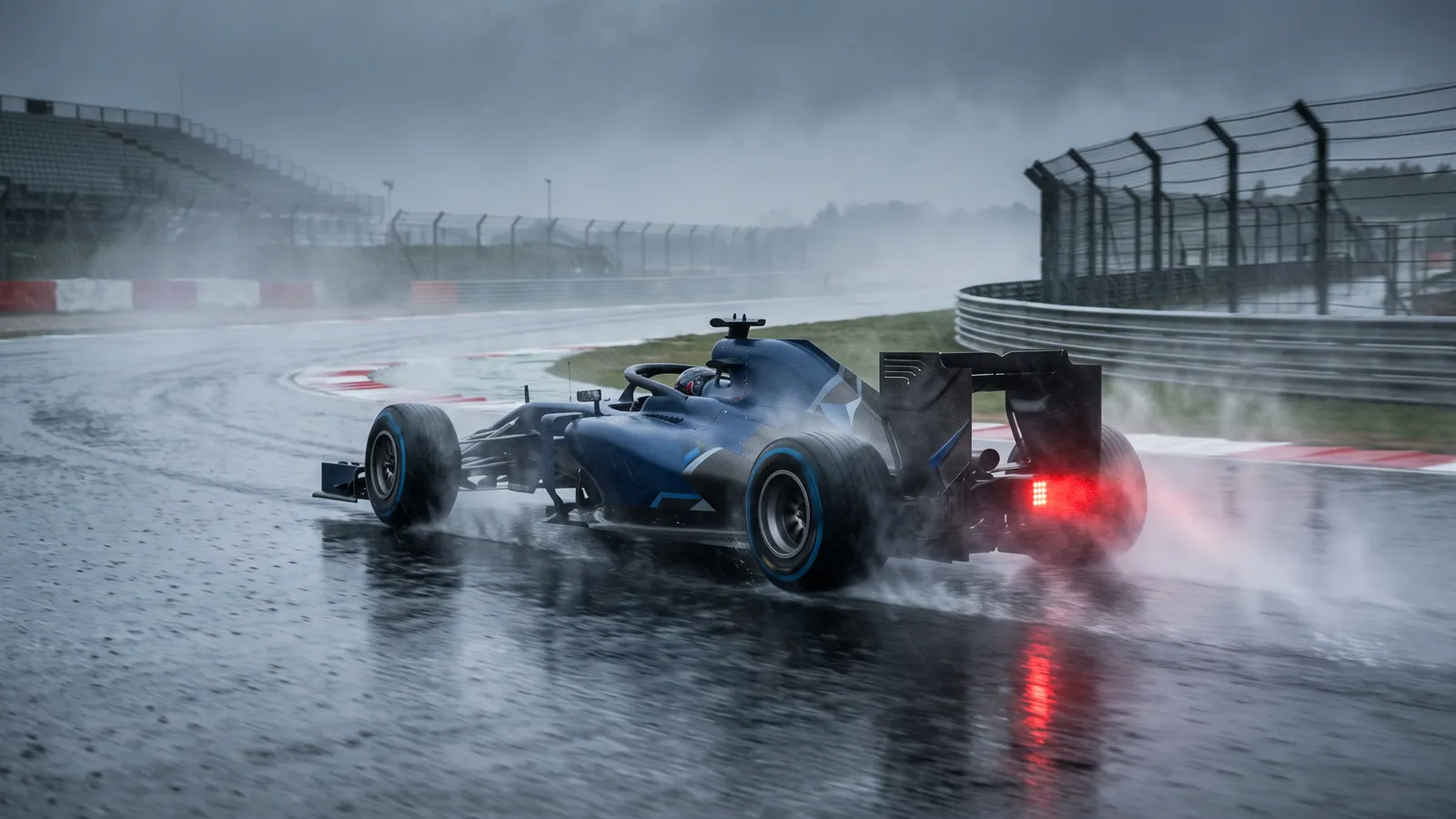
Intermediates, marked with a green sidewall, have shallower channels. They suit a track that is wet but not flooded, or one that is drying. Full wets, marked in blue, have far deeper channels for standing water. Pirelli says a single intermediate can disperse around 35 to 40 litres of water per second, and a car on intermediates at full speed can shift about 150 litres per second. Full wets, it adds, can roughly double that.
The trade-off is simple and a little cruel. The more water a tyre can move, the more tread it carries, and the more that tread squirms and overheats once the water is gone. A full wet on a drying road is a very expensive way to find out where the limit is.
When do teams switch from slicks to intermediates?
There is a rule of thumb, and Pirelli states it plainly. Once slick lap times climb to 110% to 112% of normal, it is time to move to intermediates. If a dry lap is 1:30, that means thinking about a change when laps reach about 1:40. A similar jump from normal intermediate lap times is the signal to go to full wets.
Two things sit behind that number. The team can help from the pit wall with theoretical information about how much water is on the track and where it is. The driver, though, decides which tyre best suits the conditions. That split matters. A radar picture is a map; the steering wheel is the territory. The best wet-weather calls in any season tend to come from the driver who says the thing the data has not caught up with yet.
There is also a quiet cost to being early. A driver who pits for intermediates on a track that is still dry pays for a stop and a slow lap before the rain arrives. A driver who stays out too long loses the same amount of time in a different way, one corner at a time. Neither mistake is free, which is why the timing of the first stop in a mixed race is worth watching more than any overtake.
What did Sao Paulo qualifying show about wet tyres?
Quite a lot, because Saturday 7 November 2026 had every flavour of wet. Teams began on full wets, and some switched to intermediates in Q2, according to PitDeBrief. Autosport reports a red flag of more than an hour because of heavy rain and standing water, and Q1 was stopped early after drivers reported aquaplaning.
Lando Norris then took pole on intermediates with a 1:27.470 in a soaked Q3. Read that sentence twice. The pole-sitter did it on the tyre that Pirelli calls the all-rounder, in conditions that had earlier forced a stoppage. Our qualifying report has the full order and the penalties that rearranged it.
Will it rain for the Brazilian Grand Prix?
Possibly. Formula1.com and PlanetF1 both see a real chance of rain on race day, with air temperatures in the teens. They disagree on the exact chances, and both warn that forecasts can change, so we are leaving the percentages out. The honest summary is that the race could start dry, wet, or in between, and Interlagos is the sort of place where the forecast gets the last laugh.
Does rain change who wins?
In 2026 so far, not much. Our wet-race analysis found that rain touched three rounds this season and the grid held in all three, with each race won from first place. Three races is a small sample, and nobody should treat it as a law. But it does suggest that in a wet start the car in front keeps the clean air and the clean visibility, which is worth more than usual when spray is flying.
The twist this weekend is that the front of the grid is not the usual order. Several fast cars start well back because of engine penalties, and a wet race makes a recovery drive harder, not easier, because passing is riskier when you cannot see the car ahead. Whoever reads the crossover from wet to dry first will have the best afternoon, and that is a tyre story before it is a pace story.
How to follow the tyre calls on Sunday
Watch the live page for session updates and tyre choices on the grid, and use Telemetry once the race is under way to see which drivers are losing time first. If the track starts to dry, the first person to put on slicks and survive the lap will have made the call of the day. If you want to make your own wet-weather pick, create a free account and put your Energy on it. We will not pretend our forecast record is better than yours.
Frequently asked questions
What is the difference between intermediate and full wet tyres in F1?
Intermediates have shallower channels and suit a wet or drying track. Full wets have deeper channels for standing water and can roughly double the water an intermediate-shod car moves, per Pirelli.
When do F1 teams change from slicks to intermediates?
A common rule of thumb from Pirelli is once slick lap times reach about 110% to 112% of normal. The driver makes the final call, with pit-wall data as support.
Does rain change the winner in F1 2026?
In the three rain-touched races so far in 2026 the grid held and each was won from first place, per our earlier analysis, but that is a small sample.
Sources
- When it is time to change from slick to wet tyres in Formula 1 — Pirelli
- What is the weather forecast for the 2026 Sao Paulo Grand Prix? — Formula1.com
- F1 Brazil weather: What is the risk of rain at Interlagos this weekend? — PlanetF1
- F1 Brazilian GP: Norris splashes to pole from Russell — Autosport
- F1 2026 Sao Paulo GP qualifying report — PitDeBrief
Related
Brazilian GP Tyre Strategy: Why Two Stops Gained More
All 20 Brazil finishers pitted in the same windows. The only fork was an extra soft stop, and the three drivers who skipped it gained the most places.
Brazilian GP Start Time 2026: Grid, Weather, What to Watch
Brazilian GP start time 2026: 17:00 UTC on 8 November. The rebuilt grid, the rain question and three storylines to watch at Interlagos.
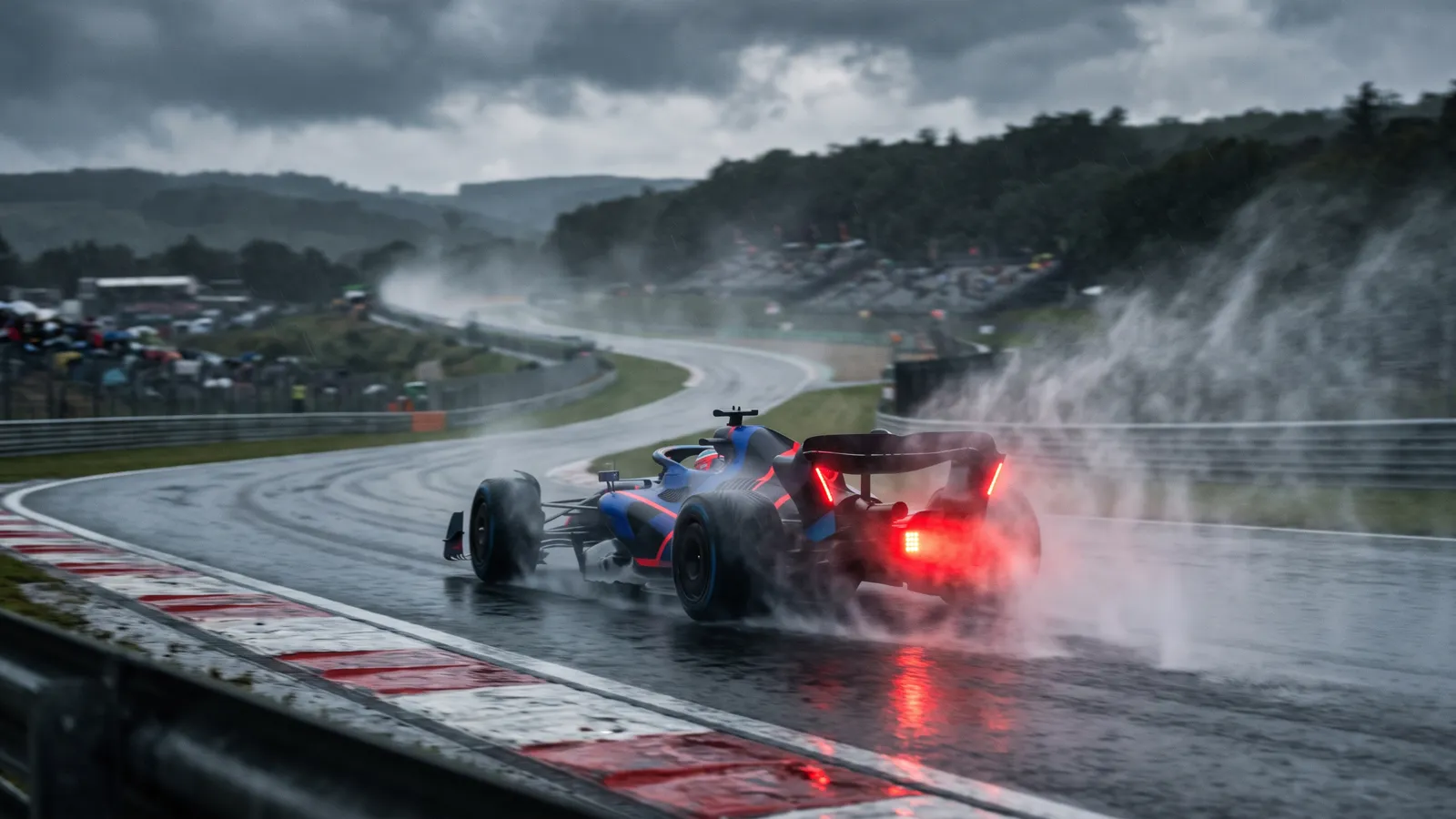
F1 Wet Race 2026: Rain Hit Three Rounds, Grid Held
Rain touched three of 19 rounds in 2026 and all three were won from first on the grid. GridRaces data on the wet-race myth, with Interlagos in the forecast.