 Entrar
Esta página está disponível só em inglês. A versão em português depende de revisão de um advogado, não de tradução.
ExplainersMexico City Altitude F1: How Thin Air Changes the Cars
At roughly 2,200 metres, the Autodromo Hermanos Rodriguez makes every part of an F1 car work for a different result.
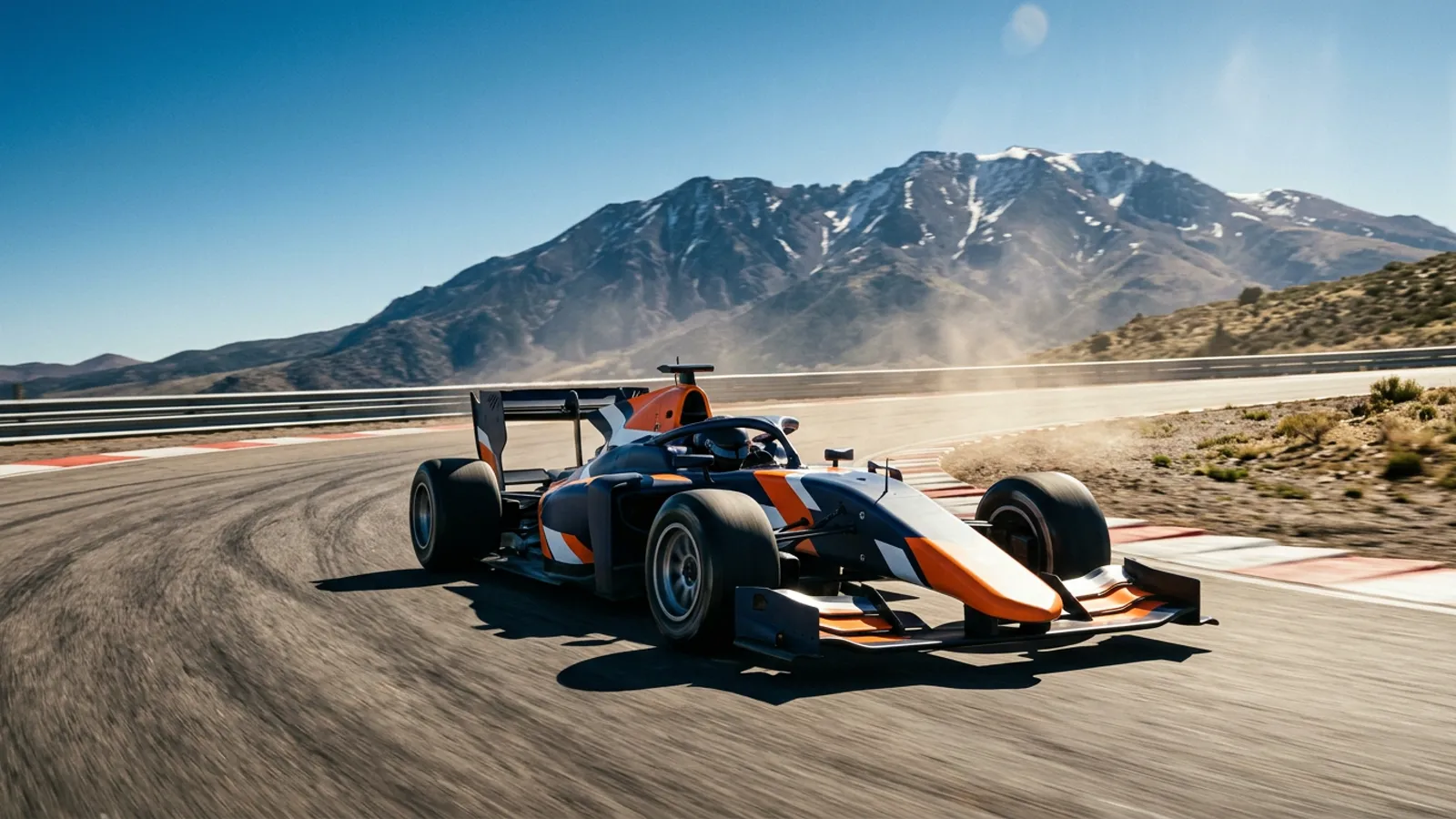
Key takeaways
- The Autodromo Hermanos Rodriguez sits roughly 2,200 m above sea level, almost three times higher than the next-highest circuits on the calendar.
- Thin air cuts both downforce and drag, so cars reach very high straight-line speeds but have less grip in the corners.
- Less dense air also carries away less heat, so brakes, tyres and power units run hotter and teams open up the bodywork.
- Turbochargers have to work harder at altitude, which makes power unit management a reliability issue as much as a power issue.
- The race starts on Sunday 1 November 2026 at 20:00 UTC, with a dry, sunny forecast of around 24C.
The Mexico City altitude F1 teams face is simple to state and hard to engineer around: the Autodromo Hermanos Rodriguez sits roughly 2,200 metres above sea level, where the air is thin. Thin air means less downforce and less drag, higher straight-line speeds, hotter brakes and a power unit that has to work harder to make the same power. The Mexico City Grand Prix, round 19 of 2026, starts on Sunday 1 November 2026 at 20:00 UTC, and every one of those effects will be in play.
How does Mexico City altitude affect an F1 car?
Think of the air as the fourth component in the car, after the engine, the chassis and the tyres. At sea level it is a heavy, willing partner. In Mexico City it is a thinner one. Williams explains that the circuit is almost three times higher than the next-highest venues on the calendar, the Red Bull Ring at around 700 metres and Interlagos at around 800 metres. That gap is why Mexico gets its own engineering plan rather than a tweaked version of a normal one.
The first consequence is downforce. Less air hitting the wings means less load pushing the car into the tarmac. Williams notes that even with high-downforce wings fitted, a car at this track produces less downforce and less drag than it would at Monza, a low-downforce circuit. So teams run their biggest wings here and still end up with a car that feels light and slides more than the setup sheet suggests.
The second is speed. With less drag, cars reach very high speeds at the end of the long straight, and there is less grip in the corners to use it. Brake zones get long and demanding. Tyre behaviour and car balance over kerbs and bumps change too, which is why a lap that looks comfortable in a simulator can feel nervous in the cockpit.
Why is cooling the real headache?
Here the thin air hurts twice. A radiator or brake duct works by moving air through it. Less dense air carries away less heat, so brakes, tyres and the power unit all run hotter than the same car would at a lower circuit.
Formula1.com's technical analysis from the 2015 race in Mexico, the first after the circuit returned, is a useful reminder of how severe this can get. It describes the thin air making it hard for teams to keep key components inside their working temperatures, and it reports that Nico Rosberg's rear brakes caught fire from overheating in Friday practice, which pushed Mercedes to open up its rear brake drum design. Teams today have far better tools, but the logic has not changed: open up the bodywork, accept the drag, and keep the temperatures under the limit.
The cost of opening the bodywork is real. A car with bigger cooling inlets is a little less slippery and a little less efficient, and a car running close behind another one gets even less cool air. Following a rival for a few laps in Mexico can be a mechanical decision as much as a racing one. That matters on a day when Lewis Hamilton, George Russell and Charles Leclerc fill the first three grid slots, since the cars behind them will be driving in warm, disturbed air.
What do turbochargers and power units do at altitude?
A normally aspirated engine simply loses power when the air thins. Turbocharged power units compensate, but the turbo has to spin harder to deliver the same boost, which adds stress and heat. Williams describes this as a reliability and management issue rather than a lost-power issue, which matches the 2015 account of Mercedes adding airbox ears to bring more air to the MGU-H, which had to run at higher revs.
Now the honest caveat. The 2026 power units are a different animal from the 2015 ones, with a much larger electrical share, and we have not seen a sourced figure from any team on how the new cars behave at this altitude. So we will not pretend to know how much of the old altitude playbook carries over. What we can say is that the physics of thin air has not changed. The teams that keep their cars cool without paying too much in drag will be better off on Sunday.
What about the people?
Altitude affects drivers and crews as well. Williams points to faster fatigue and poorer sleep as real human costs of working at this height. It is a small thing that adds up across a race weekend, and it is one more reason the Mexico City weekend feels longer than the clock says.
What does Sunday look like?
RacingNews365 forecasts a sunny race day at around 24 degrees Celsius with no rain in the forecast. That means a dry race with a high-altitude cooling question and no weather surprise to blame it on. The grid places Hamilton on pole ahead of Russell and Leclerc, with Kimi Antonelli fourth and Max Verstappen fifth after Verstappen's one-place penalty, according to Crash.net. Antonelli can clinch the world title in Mexico City with a top-nine finish, according to Sky Sports and ESPN, so the cooling story has a championship attached to it.
If you want to see how pace and tyres hold up once the race starts, follow GridRaces live timing and compare stints afterwards in telemetry. For a sense of how a different circuit stresses these cars, our explainer on why Austin hurts the new cars is a good companion, and our guide to overtake mode shows how cars use energy to pass. New here? Create a free account to build your own picks for the rest of the season.
Frequently asked questions
How high is the Mexico City Grand Prix circuit?
The Autodromo Hermanos Rodriguez sits roughly 2,200 metres above sea level, according to Williams. The next-highest circuits on the calendar, the Red Bull Ring and Interlagos, are around 700 and 800 metres.
Why do F1 cars have less downforce in Mexico City?
The air is thinner, so the wings have less air to work with. Even with high-downforce wings, a car makes less downforce and less drag there than it would at Monza.
Why does cooling matter so much in Mexico?
Less dense air carries away less heat from radiators and brake ducts, so brakes, tyres and the power unit run hotter. Teams open up bodywork to compensate, which costs some drag.
Sources
- What are the Challenges of Racing at Altitude? — Williams Racing
- Technical analysis: Keeping cool in Mexico — Formula1.com
- 2026 F1 Mexican Grand Prix weather forecast — RacingNews365
- F1 2026 Mexico Grand Prix: Updated starting grid — Crash.net
- How Kimi Antonelli can win the 2026 F1 title in Mexico — Sky Sports
- Kimi Antonelli title race permutations — ESPN
Related
Hamilton Pole Mexico City 2026: Nine Thousandths Matter
Lewis Hamilton took pole in Mexico City by 0.009s from George Russell, his first for Ferrari. A short history of one very small number.
Mexico City GP 2026 Predictions: Five Picks for Sunday
Five picks for the 2026 Mexico City Grand Prix, from Antonelli's title chance to Hamilton's pole, Piastri's recovery and the safety car.
F1 Grid Penalty Explained: Why Bottas Got 50 Places
Valtteri Bottas starts Mexico City from the back after a 50-place penalty. Here is how F1 grid penalties and power unit allowances work.